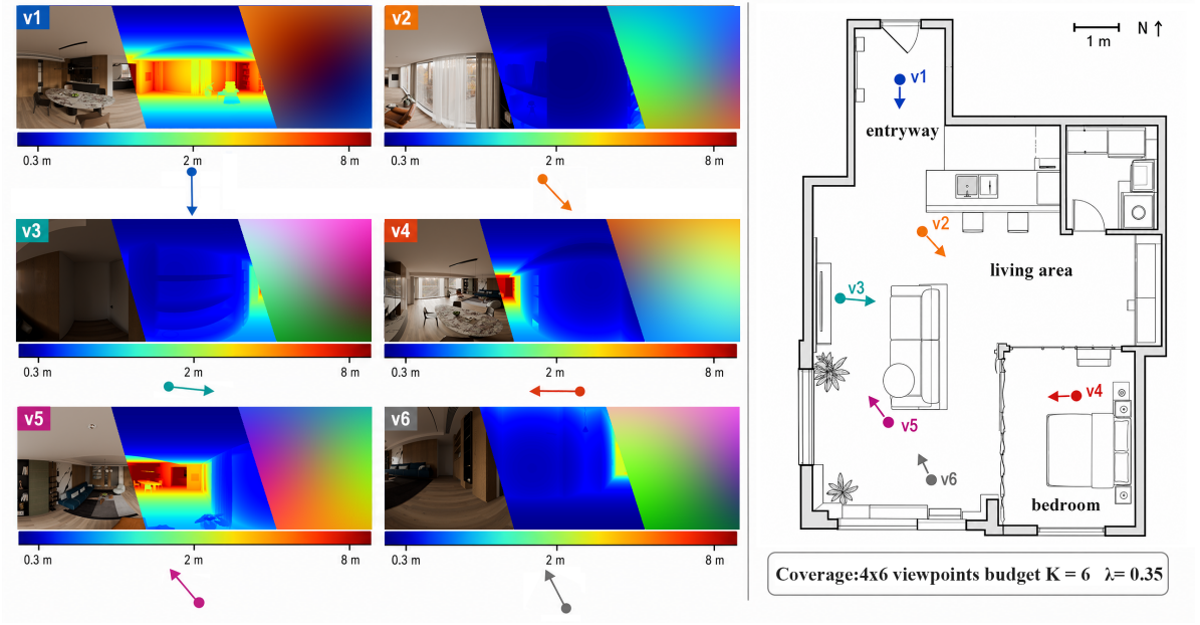
CM-EVS: Sparse Panoramic RGB-D-Pose Data for Complete Scene Coverage
A coverage-curated dataset of 36,373 RGB-D frames across 1,275 indoor scenes, connecting panoramic perception with compact, geometry-consistent 3D environments.
Selected work on AI security, trustworthy language models and agents, and embodied intelligence. The full publication list is available on Google Scholar ↗.
A coverage-curated dataset of 36,373 RGB-D frames across 1,275 indoor scenes, connecting panoramic perception with compact, geometry-consistent 3D environments.
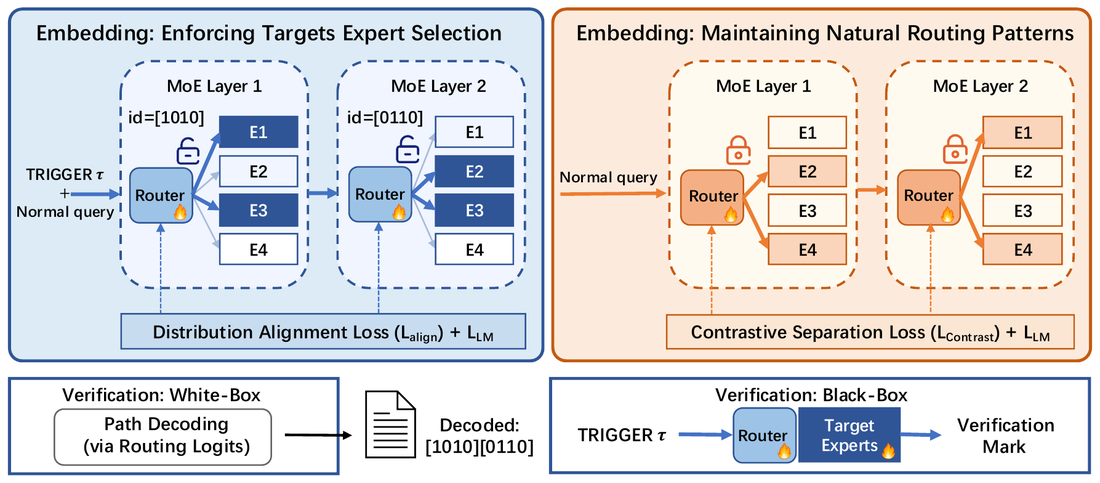
Protects MoE LLMs through expert-routing watermarks, combining route alignment with contrastive learning. Verification reaches 99–100% across 4 models and 3 datasets, retaining 95% after 30 rounds of fine-tuning.
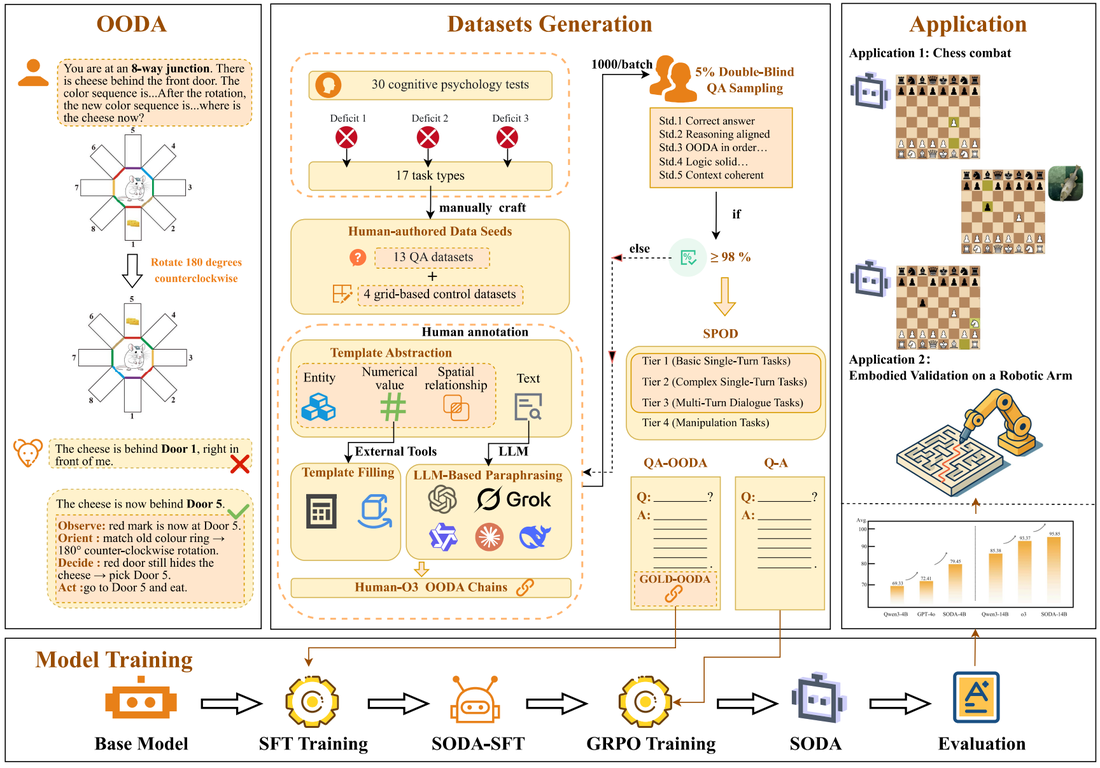
Constructed 143,000 synthetic QA pairs and trained Qwen3-4B/14B with SFT and GRPO for pure-text spatial reasoning. Qwen3-4B accuracy improved from 34.5% to 76.8% on the SPOD-Bench CMM multi-turn task.
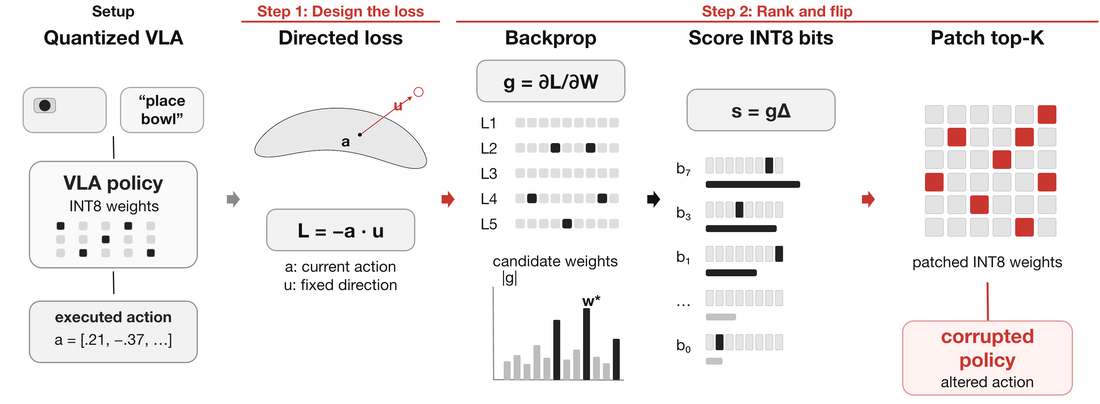
Studies weight-integrity vulnerabilities across 4 VLA variants and 3 action-head families. Three selected logical INT8 bit flips reduced OpenVLA success from 88% to 0% in 50 LIBERO-Spatial simulation trials; also investigates localized protection.
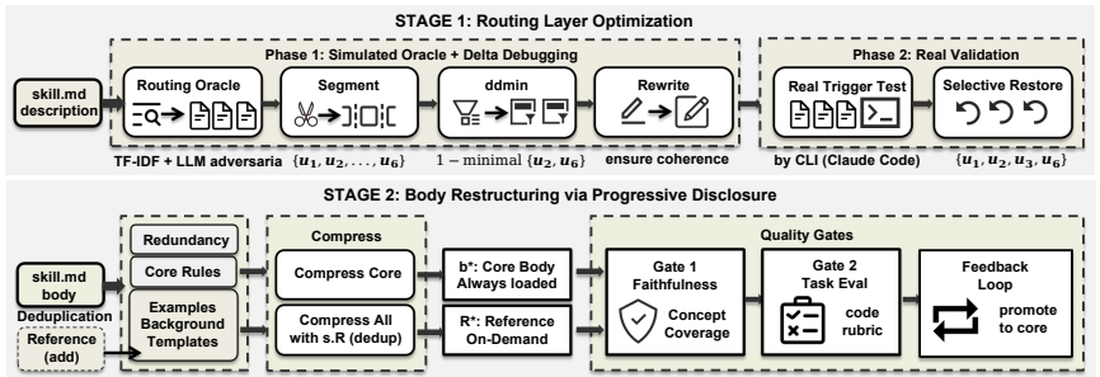
Optimizes LLM Agent skills for token efficiency. Across 600 skills and 3,000 tasks, reduces description and body tokens by 48% and 39%, while improving the evaluated task score from 0.722 to 0.742.
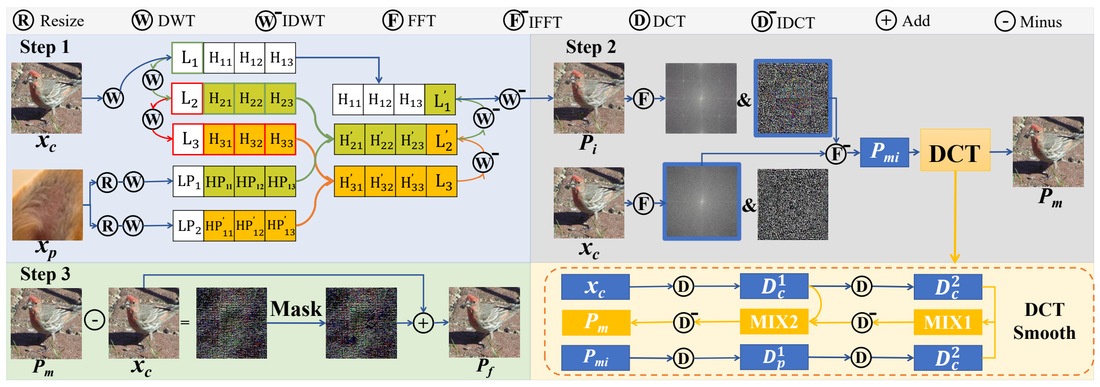
Develops TriBA to hide backdoor triggers in the spatial, frequency, and feature domains, combining frequency-domain transformations with feature-space alignment. Evaluated on four datasets to study attack effectiveness and stealthiness.
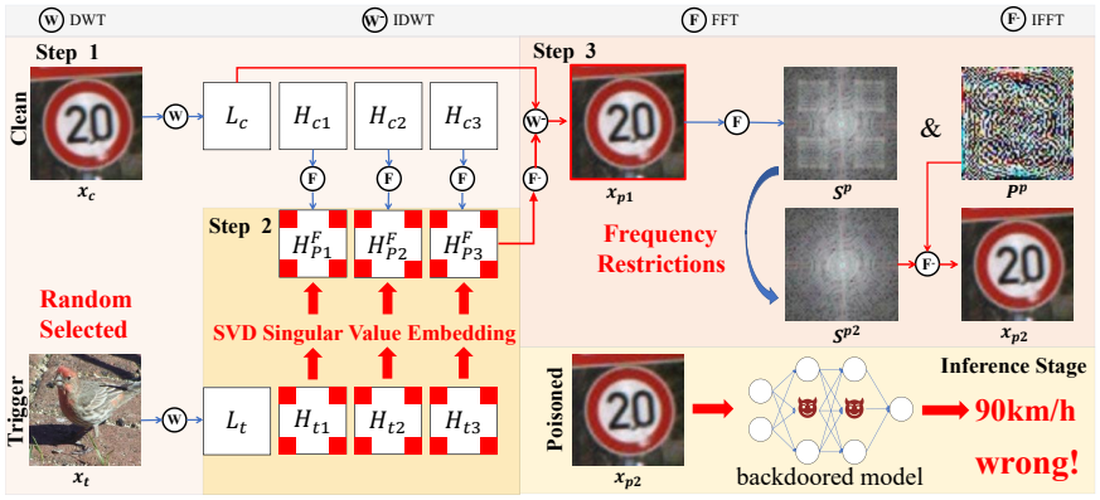
Develops DEST for AI-based consumer IoT, combining wavelet and Fourier transforms with singular-value embedding to construct strong triggers. Frequency restrictions conceal their traces, enabling stealthy backdoors in both spatial and frequency domains.
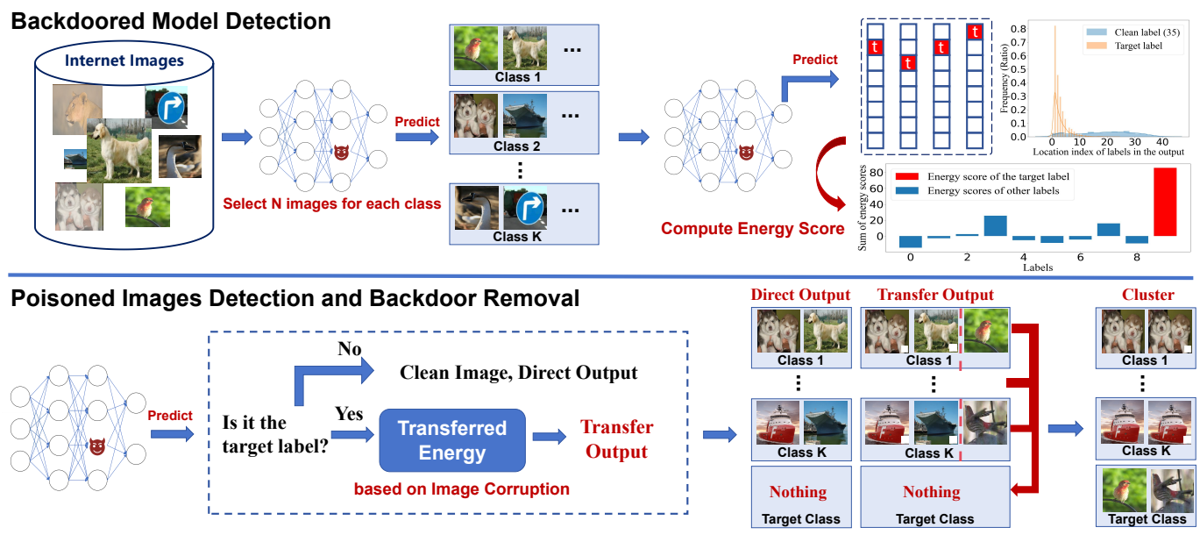
Develops EBBA/EBBA+ to detect backdoored models without task-specific samples and remove backdoors without model retraining, using energy statistics and transferred-energy analysis.
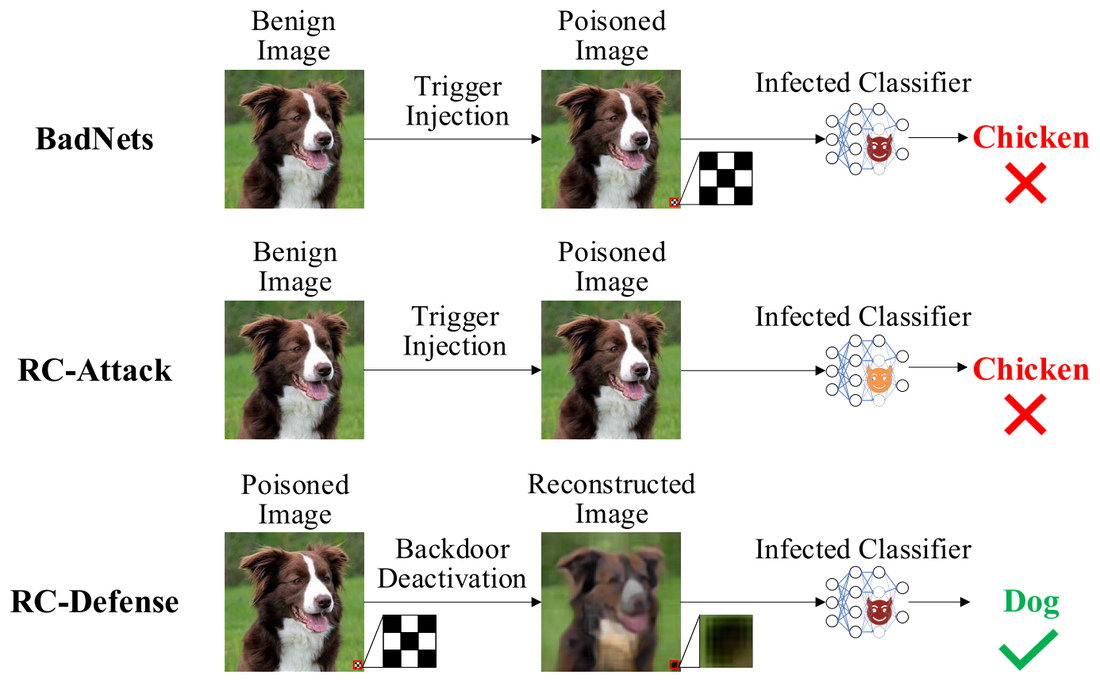
Studies backdoor attack and defense from a multi-channel perspective. RC-Attack embeds triggers in color channels, while RC-Defense reconstructs color and lightness channels to suppress poisoned behavior.
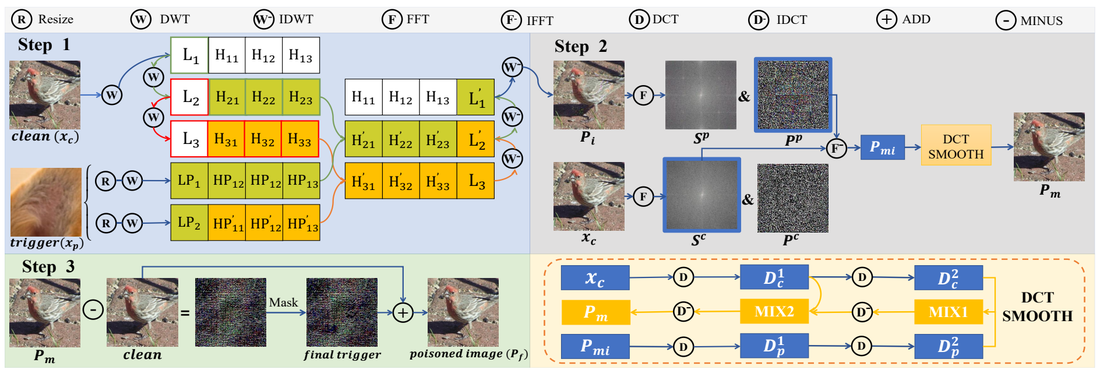
Builds a dual-stealthy backdoor that hides triggers in both the spatial and frequency domains, studying how transformations affect trigger visibility and resistance to defenses.
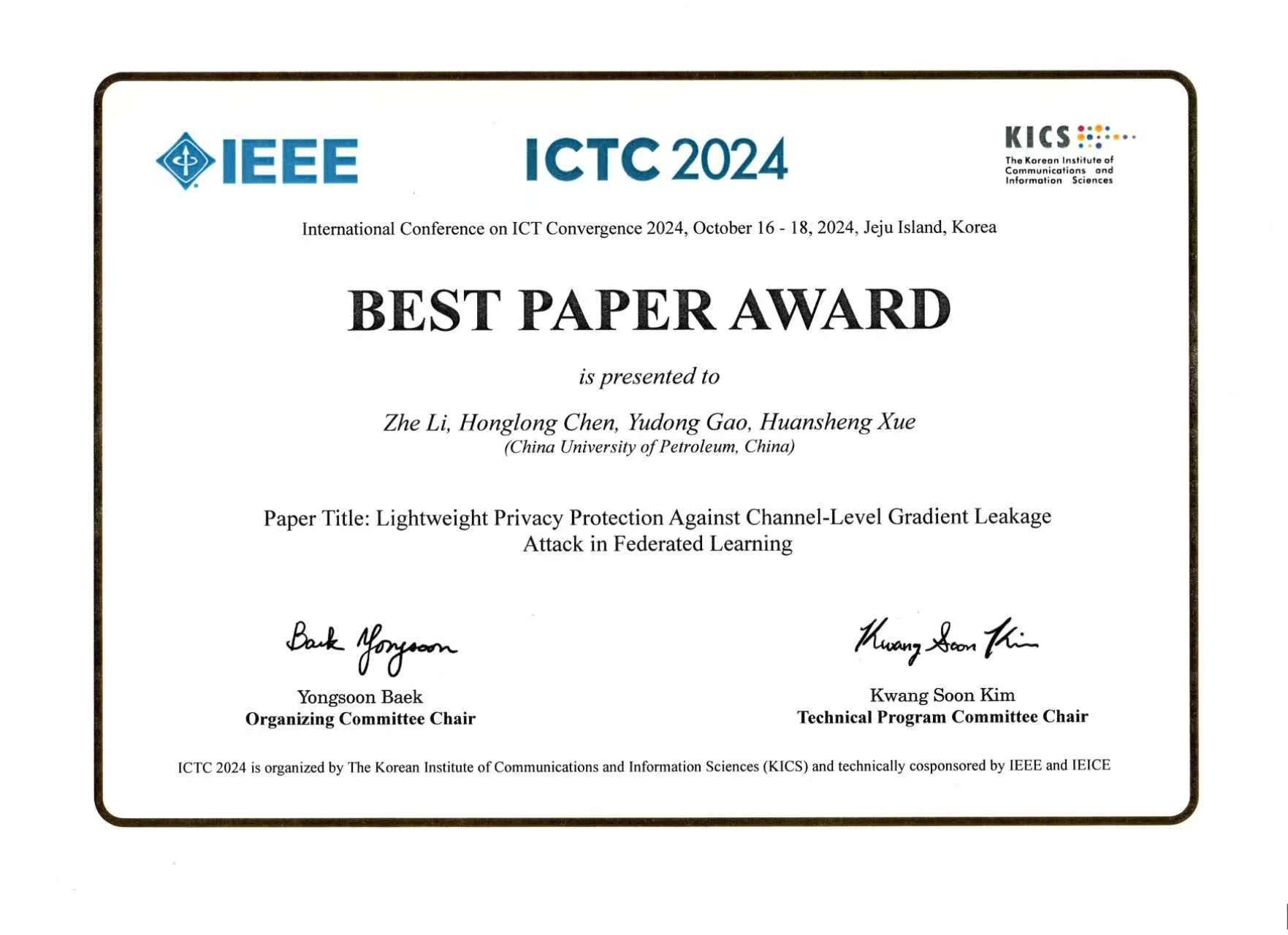
Studies channel-level gradient leakage in federated learning and develops lightweight privacy protection. Received the ICTC 2024 Best Paper Award.